Wood fence sun damage is one of the most overlooked threats to a fence's lifespan in the GTA, and it starts the moment your boards face direct sunlight. Unlike sudden storm damage, UV degradation is gradual, making it easy to miss until the structure is already compromised. If your fence is showing signs of fading, cracking, or surface lifting, sun exposure is likely the cause.
How UV radiation breaks down wood
Sunlight contains ultraviolet (UV) radiation that directly attacks lignin - the natural compound that binds wood fibres together and gives the material its colour and structural cohesion. Over time, UV exposure breaks down lignin on the surface, causing the top layer of wood to grey, weaken, and separate from the layers beneath. This is not just a cosmetic issue. Once the surface layer degrades, moisture penetrates more easily, accelerating rot, warping, and cracking.
South-facing and west-facing fence panels take the heaviest UV load through the day. In GTA communities like Mississauga and Etobicoke, where lots are often oriented around streets running north-south, large fence sections can face direct afternoon sun for six or more hours daily during summer months — compounding wood fence sun damage far faster than in shaded yards.
How UV radiation breaks down wood
Sunlight contains ultraviolet (UV) radiation that directly attacks lignin - the natural compound that binds wood fibres together and gives the material its colour and structural cohesion. Over time, UV exposure breaks down lignin on the surface, causing the top layer of wood to grey, weaken, and separate from the layers beneath. This is not just a cosmetic issue. Once the surface layer degrades, moisture penetrates more easily, accelerating rot, warping, and cracking.
South-facing and west-facing fence panels take the heaviest UV load through the day. In GTA communities like Mississauga and Etobicoke, where lots are often oriented around streets running north-south, large fence sections can face direct afternoon sun for six or more hours daily during summer months — compounding wood fence sun damage far faster than in shaded yards.
The stages of sun damage in wood fencing
Understanding how sun damage progresses helps homeowners act before structural problems develop:
- Stage 1 — Greying: Surface lignin breaks down, and the wood transitions from its natural warm tone to a dull silver-grey. This stage is cosmetic but signals that UV protection on the surface has been depleted.
- Stage 2 — Surface cracking: With lignin degraded, the wood's surface fibres lose flexibility. Seasonal temperature swings cause the boards to expand and contract, producing fine surface cracks (also called checking) that run along the grain.
- Stage 3 — Deep cracking and splitting: Prolonged exposure causes cracks to deepen. Moisture enters through these openings and accelerates rot from within. At this stage, boards may begin to warp, cup, or split entirely.
- Stage 4 — Structural compromise: If left unaddressed, sun-damaged wood loses the density needed to hold fasteners securely. Boards may pull away from rails, and posts can weaken at ground level.
Why cedar holds up better but isn't immune
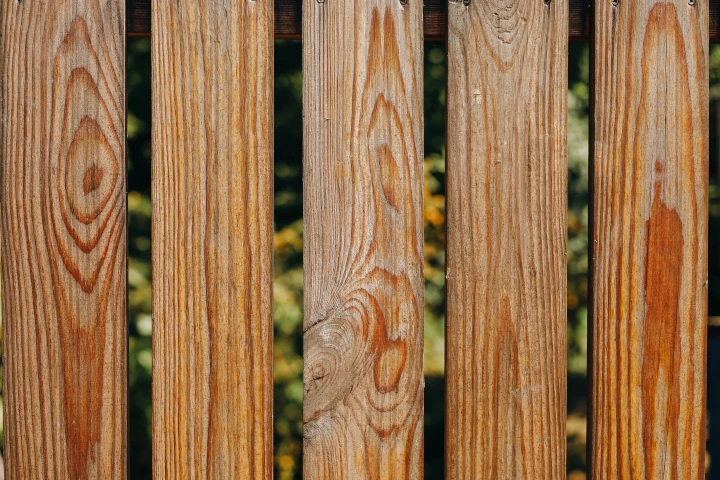
Grade-A Cedar is one of the best-performing wood species for Ontario fence builds, and for good reason. Cedar's natural oils slow moisture absorption and provide some resistance to surface degradation. In Vaughan and surrounding GTA communities, cedar fencing is a popular choice precisely because it handles Ontario's extreme seasonal range better than pine or spruce alternatives.
That said, cedar is not UV-proof. Without a protective finish, even Grade-A Cedar will begin showing surface greying within one to two seasons of installation. Maintained cedar — cleaned and sealed regularly — can hold its colour and structural integrity for fifteen years or more. Neglected cedar will degrade on the same timeline as lower-grade wood, just starting from a stronger baseline.
How to protect a wood fence from UV damage
The most effective protection combines proper material selection at installation with ongoing surface maintenance:
-
UV-blocking sealants and stains: A penetrating oil-based stain with UV inhibitors is the most effective topical protection for wood fences. Unlike paint, which sits on the surface and can peel, penetrating stains absorb into the wood fibres and protect from within. Reapplication every two to three years keeps the protection active.
-
Semi-transparent vs solid stains: Semi-transparent stains allow the wood grain to show while blocking UV. Solid stains offer stronger protection but obscure the natural look. For premium cedar installations, a semi-transparent finish preserves the aesthetic while extending lifespan.
-
Shade and structural placement: Where possible, fence orientation during planning can reduce direct sun exposure. Mature trees and garden plantings on the south or west side of a fence significantly reduce the UV load on the boards.
-
Annual inspection: Catching surface cracking at Stage 1 or 2 costs far less to address than Stage 3 or 4 damage. A light sanding and reapplication of sealant at the first sign of greying resets the protection cycle.
When sun-damaged boards need replacing
Not every sun-damaged fence requires a full replacement. In many cases, individual boards showing Stage 3 or 4 damage can be replaced while the rails and posts remain structurally sound — provided the damage has been caught before it spreads to the framing. A fence assessment identifies which components can be saved and which need to go, allowing for targeted repairs rather than a full teardown.
If your wood fence is showing signs of sun damage — whether you're in Etobicoke, Mississauga, Vaughan, or anywhere across the GTA — Ferrari Fences offers consultations to assess the current condition and recommend the right path forward. Built to last. Finished to impress.