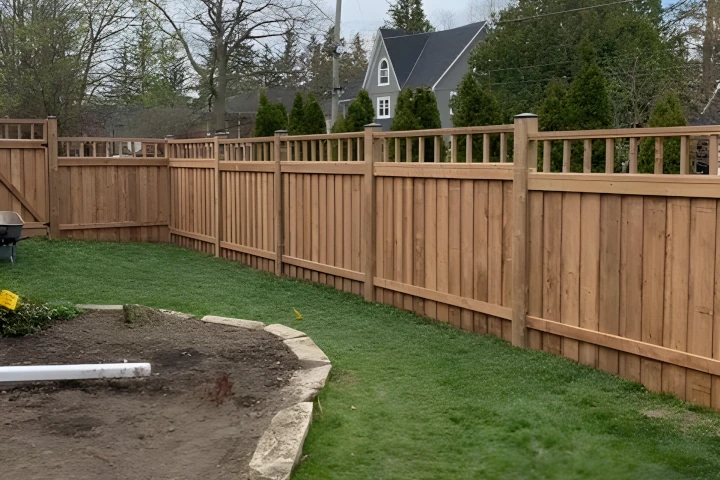
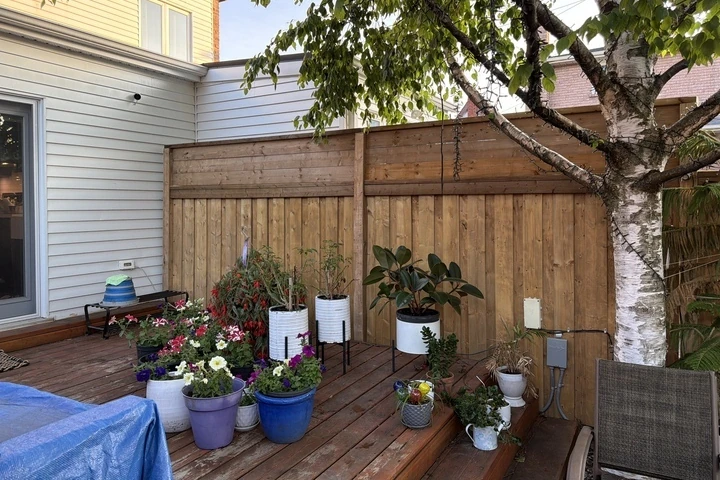
Fence maintenance Ontario homeowners can actually use doesn’t require a full weekend or a contractor on speed dial. The mid-season window — late July through August — is the best time to assess your fence while the ground is stable, the wood is dry, and any issues from spring installation or early summer heat are fully visible. A structured walkthrough now prevents the small problems of August from becoming the expensive repairs of October.
Why August is the right time for a fence assessment
Ontario’s fence maintenance calendar has two critical windows: spring, after the frost heave cycle, and late summer, before fall rains and dropping temperatures arrive. The August window is often overlooked because the fence looks fine from a distance. But mid-season is when UV damage, heat expansion stress, and early moisture issues are easiest to catch and cheapest to address.
By September, moisture starts returning. By October, the repair season is closing. Catching a loose post, a cracked board, or a gate alignment issue in August means addressing it in dry conditions with full summer ahead, rather than rushing a fix before the ground freezes.
The mid-season maintenance checklist
Work through this in order — posts first, then rails, then boards and panels, then gates and hardware.
Posts
-
Check for lean: Stand at one end of the fence and sight down the line. Posts that have shifted since spring installation or frost heave should be visible. Minor lean caught now is a straightforward fix. A post that has leaned far enough to pull the rail out of its connection needs more significant intervention.
-
Rock test: Push each post laterally at the top. Solid posts don’t move. Movement at the base indicates either a shallow set, concrete deterioration, or rot at the ground line—the most common failure point for wood posts in Ontario’s climate.
-
Ground line inspection: Probe the wood at and just below ground level with a screwdriver. Sound wood resists penetration. Soft or punky wood at the ground line is rot, and a post in this condition will not survive another freeze-thaw cycle intact.
Rails
-
Check rail-to-post connections: Screws and nails back out over time as wood expands and contracts seasonally. Any fastener that has backed out more than a few millimetres should be replaced with a longer screw driven into clean wood.
-
Look for sag: Rails that are sagging mid-span are either undersized for the span, losing their fastener connection at one end, or have developed internal rot. A straight rail that sags when you press down on it mid-span has lost structural density and should be replaced.
-
Inspect for splits: Longitudinal splits along the rail length are a moisture and UV issue. Splits running across the grain at the post connection point are a structural concern—the rail is failing at its load-bearing point.
Boards and panels
-
Surface condition: Boards showing grey discolouration have lost their UV protection. Fine surface cracking (checking) that runs along the grain is a Stage 2 UV damage indicator. Both are addressable with a clean and reseal. Deep cracking or splitting that penetrates the board’s thickness means the board needs replacing.
-
Warping and cupping: Boards that have cupped (edges higher than the centre) or bowed away from the fence plane have absorbed moisture unevenly. This is often a finishing issue — boards sealed on one face and left bare on the other will always cup toward the unfinished side.
-
Fastener check: Walk the fence and look for boards with popped nails or blacked-out screws. A board that is only held by one fastener is a wind event away from becoming a projectile.
Gates and hardware
-
Gate swing and latch: A gate that drags, doesn’t latch cleanly, or has shifted off square since spring has a hinge, post, or alignment issue. Test the latch with the gate in its fully open and fully closed position. Both should operate without force.
-
Hinge condition: Check for surface rust on steel hinges, loose mounting screws, and wear at the hinge pin. Hinges carrying a heavy gate in Vaughan or Etobicoke go through significant thermal cycling over a full Ontario year — annual inspection catches wear before the hinge fails under load.
-
Latch alignment: The latch receiver and the latch bolt should align without lifting or pushing the gate. Misalignment of more than a few millimetres indicates the gate post has moved or the gate frame has racked.
Durability: what the checklist is actually protecting
A well-built fence in Ontario — Grade-A Cedar posts set below the frost line, rails fastened with stainless or hot-dipped galvanised hardware, boards finished with a UV-blocking penetrating stain — should reach fifteen years with mid-season upkeep and no major interventions.
What shortens that timeline is deferred maintenance. A backed-out screw becomes a loose board. A loose board becomes a racked rail. A racked rail puts lateral stress on the post. A stressed post, combined with Ontario’s freeze-thaw cycle, becomes a leaning post that needs replacement. The cost compounds at each stage. The August inspection is what interrupts that chain early.
Preventive care: what to do after the inspection
-
Reseal any boards showing surface greying or Stage 1–2 checking. Clean the surface first with a wood cleaner, allow to dry fully, then apply a penetrating UV-blocking stain. Do not apply sealant to wet wood.
-
Replace backed-out fasteners with longer screws driven into solid wood. Do not drive new fasteners adjacent to the original holes — the wood there has been weakened by the original fastener.
-
Clear debris from the base of the fence. Soil, mulch, and leaf buildup against the base of the boards accelerates moisture retention and rot at the ground line. Keep the bottom board at least 50mm above grade.
-
Lubricate gate hinges and latch hardware with a dry lubricant or silicone spray. Oil-based lubricants attract dirt and gum up over time in outdoor hardware.
-
Document what you found. Photograph any posts showing lean, boards with deep cracking, or gate hardware showing wear. This record is useful for tracking progression season to season and for planning any repair work before winter.
If your mid-season inspection turns up more than surface maintenance — post rot, rail failure, or significant gate issues — Ferrari Fences provides assessments across Vaughan, Etobicoke, Oakville, and the broader GTA. We’ll tell you what needs doing now and what can wait, and give you an honest scope before any work starts.