If you're planning a fence for your GTA property, timing matters more than most people expect. The best time to install a fence in Ontario is spring — specifically April through early June — and the reasons come down to ground conditions, contractor availability, and getting the work done before summer schedules fill up entirely.
Here's what actually goes into that decision, and what it means for your project.
Why Spring Is the Optimal Window
The Ground Is Ready
Ontario's freeze-thaw cycle is one of the biggest factors in fence installation. Posts need to be set below the frost line — which in the GTA sits between 1.2 and 1.5 metres deep. During winter, that ground is frozen solid. In late winter and early spring, the frost starts lifting but the soil is often waterlogged and unstable, which makes proper post setting difficult.
By April and into May, the ground has drained and firmed up. Posts can be set accurately, concrete cures properly, and the fence goes in straight and secure. That matters because a post that goes in during poor soil conditions is far more likely to shift, lean, or fail ahead of schedule.
Concrete Sets Better in Moderate Temperatures
Fence posts are typically anchored in concrete, and concrete behaves predictably in moderate temperatures — roughly between 10°C and 25°C. Spring in the GTA sits right in that range. Extreme heat can cause concrete to cure too fast and crack. Cold temperatures slow the cure and can compromise the set if frost gets in before it hardens.
A post set in May is being anchored under ideal conditions. That foundation is what holds your fence straight for the next 15 to 20 years.
The best time to install a fence in Ontario isn't just about weather — it's about setting a foundation that holds for years.
You Get Access to the Full Season's Scheduling
Spring bookings give you first access to available dates. By June, most GTA fence contractors are working through a backlog. Summer is when homeowners want everything done at once — fences, decks, landscaping — and crews get stretched thin. Booking in April or May means you're not competing for a slot. You get the date that works for you, not whatever is left.
Spring vs. Summer Installs: A Practical Comparison
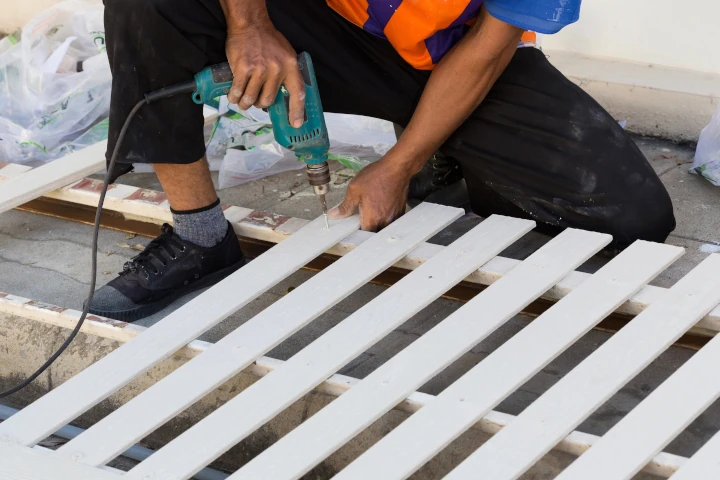
The difference between a spring and summer install isn't just about timing. It affects your experience from start to finish.
Spring Install
- Ground conditions are optimal — stable, well-drained, frost-free
- Concrete cures correctly in moderate temperatures
- More scheduling flexibility, shorter lead times
- Project is finished before peak summer use
- Your backyard is ready when you need it most
Summer Install
- Contractor availability tightens significantly by July
- Heat can affect concrete cure quality
- Longer waits for project start dates
- You lose part of the season waiting for installation
- Ground is fine but scheduling becomes the bottleneck
Summer installations can absolutely be done well — the work itself doesn't suffer if a contractor takes the time to do it properly. The real cost is scheduling. You end up waiting longer, and you spend part of summer without the fence you planned on.
What Project Readiness Actually Looks Like
One of the most common delays Ferrari Fences sees isn't on the contractor side, it's homeowners who haven't sorted out the prep work before the crew arrives. If you want your spring install to go smoothly, here's what to have in order:
Property Line Confirmation
Know where your property ends before a post goes in the ground. If there's any uncertainty, a survey is worth doing in advance. Moving a fence after it's installed because of a boundary issue is expensive and avoidable.
Permit Requirements

In the GTA, fence permits vary by municipality. Some areas require them for fences over a certain height. Check with your local municipality - Toronto, Mississauga, Brampton, Vaughan, and others have their own rules. Getting this sorted before your install date means no delays once work starts.
Access and Site Clearance
The crew needs clear access to the fence line. Remove any stored items, garden beds, or debris along the installation path. If there's a gate that needs to be widened temporarily to get equipment in, flag that in advance.
Neighbour Conversations
If your fence shares a property line with a neighbour, a quick conversation before installation avoids friction later. It also gives you a chance to explore cost-sharing if they're interested.
Homeowners who arrive prepared get faster installations, fewer delays, and better results. Project readiness is as important as the installation itself.
How Ferrari Fences Handles Spring Installs in the GTA
Ferrari Fences works across York Region, Durham, Toronto, and Peel Region. Every project starts with an accurate site measurement — that's not optional, it's what makes the installation go in straight and stay that way. The crew shows up on schedule, works through the job properly, and leaves the site clean.
Wood, chain-link, aluminium — the approach is the same regardless of material: install it right, secure it properly, and build something that holds up to GTA winters year after year.
Slots for spring fill up early. If you're planning a fence this year, the time to get on the schedule is now — not when every other homeowner in your neighbourhood has the same idea.